How to Choose the Right Solar Mounting System: Ground, Roof or Carport?
A decision framework for selecting between ground mount, rooftop, and solar carport mounting systems based on land, budget, load capacity and business goals.
TL;DR — Key Takeaways
- Category:
- Selection Guide
- Reading time:
- 8 min read
- Published:
- September 24, 2026
- Topics:
- choose solar mounting · roof mount vs ground mount · solar carport · PV system selection
- In short:
- A decision framework for selecting between ground mount, rooftop, and solar carport mounting systems based on land, budget, load capacity and business goals.
The mounting structure is the one component of a solar plant you cannot swap later. Choosing the wrong type means losing 10–20% of possible yield, paying more per watt, or failing the structural review entirely. Here is the decision framework our engineers use with clients every week.
Start with the site, not the hardware
- ▸Available area and geometry: open land, rooftop, or parking?
- ▸Roof structure: load-bearing capacity, material (metal, tile, concrete), age and warranty
- ▸Ground conditions: soil type, slope, groundwater, environmental restrictions
- ▸Grid connection point and shading obstacles
- ▸Business goal: lowest LCOE, quick payback, or added value like shaded parking
Ground mount: when you have land
Choose a ground mount when land is available and not needed for other uses. It delivers the lowest cost per watt, the best tilt optimization, and the simplest O&M access. From 500 kW to utility scale, fixed-tilt steel pile systems dominate because they are cheap, fast to install and fully recyclable.
Rooftop: when the roof is the asset
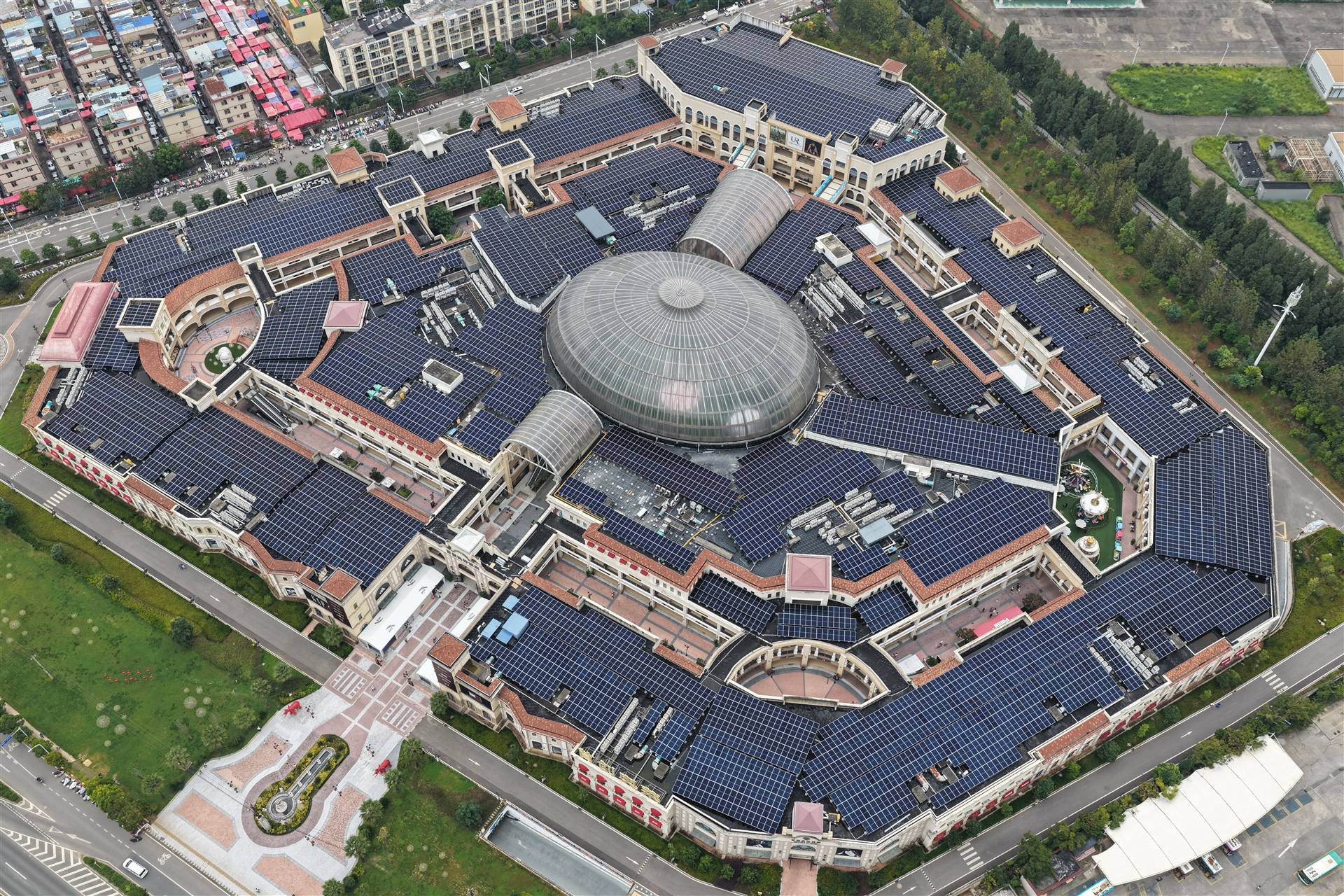
Rooftops avoid land cost entirely and put generation where consumption happens, cutting transmission losses. The key constraint is structural: the roof must carry the added dead load (typically 10–15 kg/m² for aluminum systems on a 15° tilt) plus the local wind and snow loads. Aluminum 6005-T5 rails with stainless clamps are the norm because they are light, corrosion-resistant and install without penetrating the membrane when ballast systems are used.
| Criterion | Ground mount | Roof mount | Carport |
|---|---|---|---|
| Land required | Large | None (uses roof) | Parking area |
| Cost per watt | Lowest | Medium | Highest (structure+canopy) |
| Tilt optimization | Full freedom | Limited by roof pitch | Limited by clearance |
| O&M access | Excellent | Moderate | Good |
| Structural review | Soil + wind | Roof load + wind | Column + wind |
| Payback driver | LCOE | Self-consumption | EV charging + shade |
Solar carport: the value multiplier
Carports convert an existing cost center — parking — into a revenue asset. They shade vehicles, protect them from hail and sun, and can feed EV chargers directly. The premium over ground mount comes from the elevated structure: taller columns, longer spans (5–6 m typical), and stricter wind design for the canopy. For commercial sites with fleets or EV charging goals, the payback equation often beats ground mount because you monetize the shade and parking, not just the electricity.
A practical decision checklist
- ▸No usable land + strong roof → aluminum roof mount (or carport if parking exists)
- ▸Open land + utility-scale goal → HDG steel ground mount
- ▸Parking area + EV charging plan → steel carport
- ▸Poor soil / rock → concrete ballast or helical piles
- ▸Coastal site → upgrade coating (85 μm HDG or duplex) or aluminum
- ▸High snow region → verify snow load rating before selecting aluminum
Common mistakes to avoid
- ▸Choosing aluminum for a ground mount just to "be modern" — costs 30–50% more than steel
- ▸Ignoring roof age: a 20-year-old roof may need replacement before the system pays back
- ▸Under-sizing carport columns for wind — carport canopies act like sails
- ▸Forgetting O&M access: module rows too close together are cheap to build and expensive to clean
Get a comparison for your site
Send HAOQIN your site photos, roof drawings or land dimensions. We will return a type-by-type comparison with indicative structural costs for ground, roof and carport configurations within two business days.
Need a structure engineered for your site?
Send us your project details for load calculations, configuration and pricing.