Solar Ground Mount Racking Systems: The 2026 Engineering Guide
Complete guide to ground mount solar racking: pile types, materials, load calculations, tilt angles, row spacing and cost benchmarks for utility-scale projects.
TL;DR — Key Takeaways
- Category:
- Ground Mount
- Reading time:
- 9 min read
- Published:
- September 23, 2026
- Topics:
- ground mount solar · solar racking · utility solar · PV mounting structure
- In short:
- Complete guide to ground mount solar racking: pile types, materials, load calculations, tilt angles, row spacing and cost benchmarks for utility-scale projects.
Ground mount racking is the most cost-effective way to build large solar arrays. This guide covers the engineering decisions that determine whether a utility-scale project is profitable for 25 years or fails within five.
What is a ground mount solar racking system?
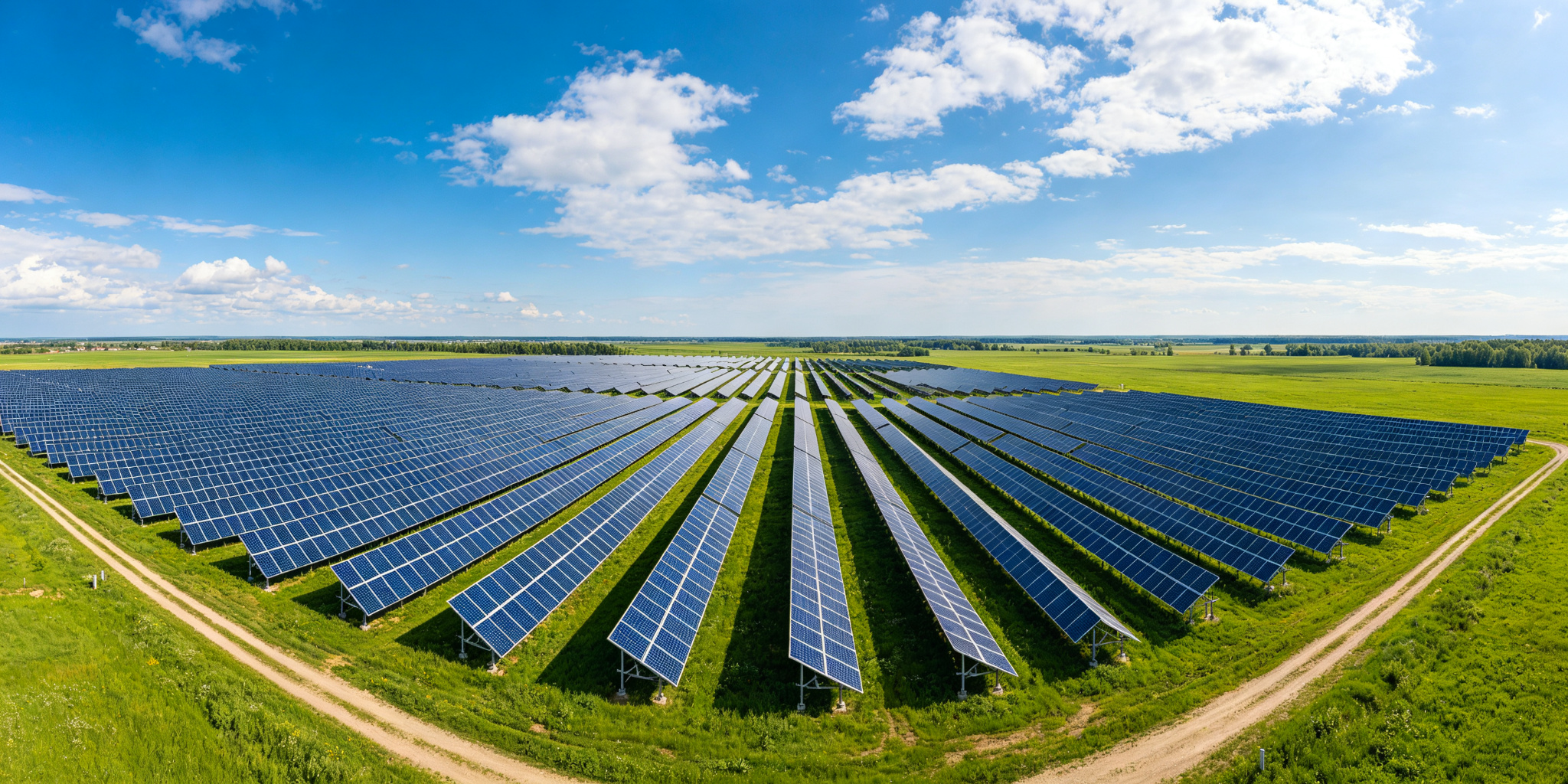
A ground mount system is a steel or aluminum structure that supports solar panels above open land. Unlike rooftop systems, ground mounts are free to use the optimal tilt angle and orientation, which typically increases energy yield by 5–15% compared to flush roof installations.
The three dominant structure types in 2026 are: fixed-tilt pile mounts, single-axis trackers, and fixed ground frames on precast or driven foundations. Fixed-tilt steel pile systems remain the global workhorse for projects from 1 MW to over 100 MW.
Foundation types: driven piles vs. concrete
- ▸Driven steel piles: fastest install (100–300 piles/day/crew), lowest cost on even soil, easily extracted at end of life. Typical pile depths: 1.5–2.5 m.
- ▸Concrete ballast blocks: used where ground penetration is prohibited or soil is rocky. Heavier and slower, but reversible without excavation.
- ▸Helical / screw piles: ideal for high groundwater areas and slopes; install by torque, no vibration.
- ▸Precast concrete piles: for very soft soil or high uplift loads; higher material cost but predictable capacity.
Material selection: HDG steel is the default
For utility-scale ground mounts, hot-dip galvanized (HDG) structural steel Q235B/Q355B is the industry standard. The zinc coating — minimum 85 μm per ISO 1461 — protects the structure in outdoor exposure for 25+ years. Galvanized steel is 30–50% cheaper per kilowatt than aluminum and carries higher strength, which matters when wind speeds exceed 40 m/s.
Aluminum 6005-T5 is used mainly for roof rails and small residential arrays where weight and corrosion in coastal air are the deciding factors. For ground mounts above 500 kW, steel wins on cost and strength almost every time.
Key design parameters
| Parameter | Typical range | Why it matters |
|---|---|---|
| Tilt angle | 20–35° | Optimizes annual yield vs. wind loading |
| Row spacing | 3–6 m (pitch) | Avoids inter-row shading, allows O&M access |
| Pile depth | 1.5–2.5 m | Driven by soil bearing capacity and uplift |
| Design wind | Up to 60 m/s | Drives member sizing and foundation embedment |
| Snow load | Up to 1.5 kN/m² | Critical in northern latitudes |
| Design life | 25 years | Matches module warranty and financial model |
Wind load design: the detail that makes or breaks projects
Most ground mount failures trace back to underestimated wind uplift and the prying action on pile connections. A correct design follows local wind codes (AS/NZS 1170.2, Eurocode 1, ASCE 7), computes the net pressure coefficient for the specific panel tilt, then checks both the member stress and the pile pull-out resistance. A 60 m/s design wind is not an exaggeration — it is the minimum for many coastal and highland sites.
Cost benchmarks (2026)
| Component | Typical share of BOS | Notes |
|---|---|---|
| Racking structure | 25–35% | Steel price dependent |
| Foundation & piles | 10–15% | Soil-dependent |
| Installation labor | 15–20% | Mechanized driving cuts this sharply |
| DC cabling & mounting | 10–15% | — |
| Inverter & AC side | 20–30% | Excluded from racking scope |
Rule of thumb: a well-optimized fixed-tilt ground mount racks in at 3–6 US cents per watt of structural + foundation cost, before labor. Mechanized pile driving and pre-assembled modules are the two fastest levers to bring it down.
Red flags when evaluating suppliers
- ▸No wind/snow load calculation provided with the quotation — only "standard design"
- ▸Galvanizing thickness below 70 μm without a written justification
- ▸No material test certificates (mill certs) available
- ▸Connection details (bolts, gussets, purlin clips) not specified by grade
- ▸No installation manual or site supervision support
What a complete quotation should include
A bankable ground mount quotation includes: structural calculation report per project site, full BOM with material grades, galvanizing certificate, pile layout drawing, installation manual, and export packing list. If any of these is missing, treat the price with caution — the cheapest quote is often the one that under-engineered the steel.
Talk to an engineer
HAOQIN engineers ground mount systems for projects from 1 MW upward, with full load calculations, HDG Q235B/Q355B fabrication and export documentation. Send your site conditions and layout for a configuration and pricing proposal.
Need a structure engineered for your site?
Send us your project details for load calculations, configuration and pricing.